Part Two: Asking Why

If you have read my last post,The Lighter Side of Theology: Asking Why,” you are already familiar with my purpose for asking “why” in our walk and ministry as Christians. And I wonder if you’ve given those six “fun” questions any thought? This little three letter word “why,” if used more often to probe our hearts and minds, would keep our motives and our biblical “correctness” in check for more things than we may realize. And that’s a healthy thing, to be kept “in check.”

I make the following points not to offend but to demonstrate that even we in the evangelical community (who boast of our Biblical basis for our church practices) fall into the error of doing and saying certain things which really are more of a tradition than anything else. The six “fun” questions from my last post hopefully were enlightening towards this fact, that they have no biblical basis.

Still I, like most other Christians, have either said, believed or done them at some point. Thank God for his grace that covers us all and never runs dry! This fact also shows how vulnerable WE ALL are towards imperfect theology and unbiblical practices. That is not to say that these things are “sinful”  but simply that the Bible is SILENT regarding them. And if we are to be “Bible based” in all we do, we must be careful to filter all things through the lenses of Scripture. Notice that God’s Word says nothing about:

1. Paul being on a horse while travelling to Damascus and then falling from it. The text simply says he fell to the ground because of the bright light of Christ’s appearing. But pictures and sermons alike almost always portray Paul as falling from his horse.

2. How many wise men came to visit Jesus. There were three types of gifts, but according to Scripture the wise men are not numbered. They could have been anywhere from two to twenty, or even more. Yet every nativity scene and even sermons, once again, portray three wise men.

3. Altar calls being practiced as a public proclamation for those commiting their lives to Christ. We find nothing even resembling an altar call in Scripture. But this is becoming the traditional way to present the gospel. And it may just be encouraging false commitments along the way. Once the first person “Goes forward” and the applause start rising from the congregation, others are more easily stimulated to walk forward under an artificial motivation caused by emotions in such an excited atmosphere. And by the way, they are not coming to an “altar” but a pulpit. The altar was in the temple. Once again, this is a term used without careful thought by the church.

4. Church as a building or a place. In Scripture it is the “gathering” of God’s people. A group, not a place. This is leading to even further unhealthy misconceptions in the modern church regarding “Having church through a television.” Obviously, if we correctly understand what church is we will not be misled in such a view.

5. The “sinner’s prayer” as the way to become born again. In the Bible, we see nothing of a “prayer” form to receive the Lord, only people believing in Jesus and then responding with baptism. Of course, I don’t think such a prayer is harmful and I am convinced that God honors each one that is sincere. But still, we need to be careful with these formulas. By this tradition, we often either give the impression that “once” a person pronounces those words they are “sealed,”  or on the other hand, until someone actually “says” those words they have not been born again. The fact is, they may have been truly converted long before ever praying along in such a formulated pattern.

6. Worship leaders telling people when to stand and when to sit. Once again in Scripture I do not find anyone instructing the congregation to stand or to sit during worship in the early church. If anything, worship was either standing or prostrate on the ground before the Lord as far as the Old Testament reveals. At any rate, no one was ever recorded as just “sitting.” But the idea of telling worshipers when to stand or sit creates a forced worship experience, and typically this is done at fixed times in the service. I uphold the need for order in our church services, but personally I am challenged with this particular practice, a practice that I myself have almost always maintained until now.

So, those are my thoughts on the six questions. I hope you’ve got something good from my bantering!

But I’d like to know in all honesty what uThink about these matters?

The Lighter Side of Theology: Asking “Why?”

I suffer from an overly-analytical mind. Or at least, that’s what I’ve been told. I think about things and look for problems so I can fix them. I even think about thinking, and yes, I find problems at times. Identifying mistakes is good, because that means we can correct them and move forward. But one negative from this is that when there is no obvious problem, I might create one, though it’s usually for myself. Perhaps the words spoken to the Apostle Paul would better suite me, “You are out of your mind! Your great learning is driving you mad.” (Acts 26:24)

Yet the truth is, as Christians, we ought to think and we ought to know what to think about what we think. Instead, what often happens is we take a lot of Christianity for granted. We fail to ask enough questions, either to ourselves or to our teachers. And those we do ask, tend to be the “who, what, when, where and hows.” All observational to collect the “facts.” That’s good, but where’s the why?

Why” is the golden question, and it’s the one my children ask me MOST. They are more interested in the “why” than any other thing. I can scarcely tell them ANYTHING without facing an inquisition of “whys!” And you know what? We should be more like them. For if we sought for the “why,” and found it, we’d be firmer in our faith and better received by all. To ask, and know, WHY we believe WHAT we believe. Could this be, at least in part, what Jesus had in mind when he spoke of “childlike faith?”

When Christians just accept and repeat what they are told without a careful eye to discernment, they replace true biblical faith with a gullible spirit and often are called out on it by the unbelievers who do ask the tough questions. And that is not a noble quality for a group of people who claim to “Know the truth.” We walk by faith, yes. But is faith to be blind or uninformed? Many of our accusers say that it is. But on the contrary, true biblical faith sees quite clearly and it is indeed “in-formed.”

We all could use a little practice at critical thinking in life. We say, do, repeat and encourage others in things we’ve heard but given little thought to. And in ministry, especially, we must ask ourselves “WHY?” Church leadership is responsible for where it takes the sheep. So I’ve begun to do this, and the results have been quite revealing in light of Scripture. Here are six FUN questions I’ve asked myself recently. I’m curious if you have ever thought about these, or others like them, and if so, what have you come away with?

1. Why do we teach that there were three magi from the East who visited Jesus?

2. Why do we refer to the “sinner’s prayer” as the formula for a person’s new birth in Christ?

3. Why do we encourage “altar calls”?

4. Why do worship leaders tell people when to stand and when to sit?

5. Why do many think the Apostle Paul fell from his horse on the road to Damascus?

6. Why do we often say “I’m going to church” or say “I’m at the church” as a location?

God, Science and the Big Bang: An Explosive Debate

Two days ago, a dear sister from Serbia sent me a message asking my thoughts about antimatter. She had dialogued with a man who bombarded her with recent findings that, according to him, proved there was no need for a “divine being” to explain the origin of life, because antimatter can be created in a particle accelerator. It’s one of the newer, more exciting topics in science and the study of physics.

The Large Hadron Collider (LHC) is a rather colossal project in every sense, one that pushes the confines of what man thought possible just over a few decades ago. Twenty years in the making, the LHC is now a sprawling construction, a 27km-long circular underground tunnel that straddles the French-Swiss border, near Geneva. And it’s making quite a bang. In fact, that is exactly what it was designed to do, to recreate a mini-Big Bang. (see the above-ground simulated image below)

Inventions like the LHC underscore the brilliance of the human mind, the summit of all terrestrial life forms. Man has been endowed with the ability to observe through the five senses, process information, analyze it, discuss it, debate it, and draw conclusions from it. Especially wonderful is his ability to create! And with the invention of the LHC come new ways to explore old mysteries. It promises what many hope will be years of thrilling, ground-breaking research that will one day explain what really happened “In the beginning.” (See close-up shot of the LHC below)

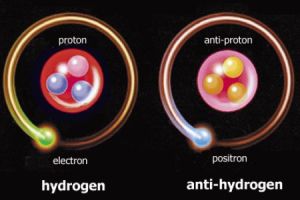
Hydrogen atoms are fed into the source chamber of the LHC where their electrons are then stripped off, leaving only hydrogen nuclei, protons with a positive charge. They are then accelerated through the tunnel until they reach the speed of light, at which time these proton packets are redirected into a collision course with each other. This is the simulation of the BB’s effects, as they believe it happened.

From this, a team of a thousand-plus scientists from 33 countries hopes to learn more about the nature of our amazing universe, the way it was seconds after its birth at the first BIG BANG, presumed to be 13.7 billion years ago. One specific mystery they want to unveil is where all the antimatter went after the explosion, which left mostly matter, the ‘stuff’ we’re made from.

But from this research, the clearest lesson we have learned so far is the premise on which scientists are approaching the birth of the universe. It was accidental in nature, and God is not a factor in their equation. The common people who are observing from the sidelines have also leapt to conclusions that not only exceed their own understanding, but that violate the principles of the selfsame empirical science supposedly being cited.

The purpose of research is to examine a subject and arrive at a conclusion, in this case, the origin of life. But when we begin research with a premise that excludes certain possible explanations, such as a divine creator, we do nothing other than reveal our philosophical bias. The evidence, if they are fair, may just point to another source, one not so quickly welcomed by materialists. Case in point, the voices being heard in the LHC project speak of the EVOLUTION of the universe. Even though they have yet to determine what happened, they have already decided that it has, and I quote, “evolved.” Does this strike you as science by the book? How has this been concluded when their search is really just beginning? Well, it hasn’t been concluded. It has been assumed, such as other ideas I look forward to covering in future posts at uThinkology. And even once they are able to reproduce the ‘birth’ of the universe with the LHC, the question will still remain, “What caused it?”

In science every effect has a cause. And if protons, or ions, from which matter is comprised, were the first building blocks to matter, where do they come from? They are not eternal, so what got the whole process going? Science can answer many questions, and I applaud the remarkable achievements that have been made by men of great minds. But until biases are put aside we do not have true research taking place. Instead, we have a philosophy that men are promoting, and one that is being accepted because geniuses have said to, while in truth the verdict has not yet been reached.

The questions that most need answering shouldn’t be limited to what happened to antimatter, but also, “Can the origin of the universe be explained without intelligent guidance or design, and does the conclusion of these studies eradicate the God-factor?”  Indeed, researchers are far from finished. What we can conclude so far, is that there is no reason (other than a hatred for the idea of a divine being) to eliminate design and creation as the possible cause for life. And let’s not overlook the fact that:

  1. These scientists are trying hard to “RECREATE” the Big Bang, and I emphasize the word ‘recreate’
  2. They are conducting the experiments with special and precisely created-and-controlled conditions that allow for the manipulation of matter
  3. They are using preexisting matter, which had to come from somewhere, for something cannot come from nothing
  4. They are doing all this under INTELLIGENT guidance, which only shows that such a delicate and fragile operation must be carefully executed by intelligent beings.

The Big Bang doesn’t in the slightest way disprove God. At most, it tells of the nature of the creation of the universe, that it was explosive. It still does not explain why it happened, or what caused the process. And it may just be that God created matter (and antimatter) in this explosive way. The Scriptures do not specify how God created, other than “In the beginning the earth was void and without form.” Some Scriptures even indicate a connection between extreme heat and creation’s end, such as:

“But the day of the Lord will come like a thief, in which the heavens will pass away with a roar and the elements will be destroyed with intense heat, and the earth and its works will be burned up. Since all these things are to be destroyed in this way, what sort of people ought you to be in holy conduct and godliness, looking for and hastening the coming of the day of God, because of which the heavens will be destroyed by burning, and the elements will melt with intense heat! But according to His promise we are looking for new heavens and a new earth, in which righteousness dwells.” (2Pet. 3:10-13 NAS95)

and

“…our God is a consuming fire” (Heb 12:29 NAS95).

I find it rather interesting that in the end, God will destroy space and matter by an explosive fire, such extreme heat that all matter will be consumed. Another Big Bang of the reverse order?

In another post, I’ll talk about “strong force” or “atomic glue” in particle physics. A scientific mystery to which the Bible appears to make reference. Empirical science will agree that every effect has a cause. We Christians maintain that God is the only uncaused cause of all matter. Because the universe is not eternal as all agree there was a beginning, we must ask what started it all? What do uThink?

The Perfect Diaper Bag

The Perfect Diaper BagFriends, I hope you get a chuckle from the title of this post (not to mention the guy in the picture). Although today is Monday, and I would have loved nothing more than to sit back and post a little something on one of the endless array of subjects that peak my (and I think yours too) interest, what time I did have available for writing needed to be applied to our MUCH-overdo update on our primary ministry here.


Because uThinkology is part of our overall ministry, and the site has a dedicated page for our updates, I felt it was appropriate to include this November news letter as a post. So here it is, our latest update in PDF on our ministry and family in Treviso, Italy. I hope you will take a few minutes to see what is happening in our lives and in this part of the world. Just click here or on the “Ministry Updates” tab above on uThinkology’s site header. You’ll be able to open the PDF in your browser. You can also choose to download it if you like.

Thanks for stopping by uThinkology. And remember, you are what uThink!

Blessings,

Mark Nigro

Creation, Evolution or Both? A Visual Concept Map on the The Origin of Life

Origin of Life

A visual concept map on the three views for the origin of life

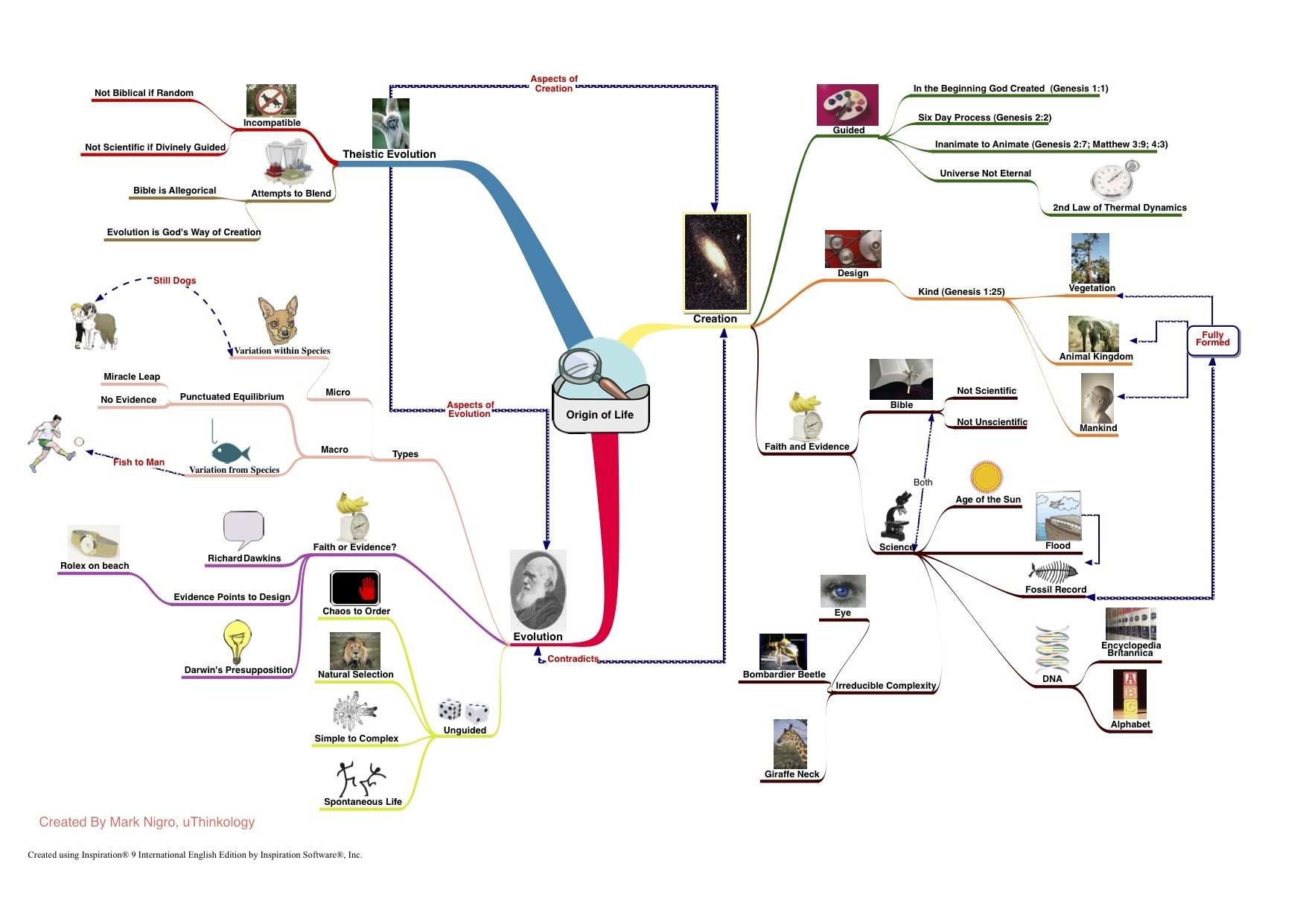
Today’s post is a mind-map entitled “Three Views on the Origin of Life.” I created this map to use as a visual guide for myself and for the congregation during Sunday morning’s message. Click on the image to enlarge it.

For the presentation, I broke the map into 15 sections, projected them as slides and walked the congregation through each main point. Visual presentations are proven to aid in learning and memory retention, so lately I’ve really made an effort to utilize them. On this map you will see dotted lines and arrows revealing the relationships and contrasts between the three views. It isn’t intended to be exhaustive, rather a brief overview that points to the soundness of Creationism’s view.

Easier said than done, however, with such massive subjects as creation and evolution. Choosing what to target and then fitting it into a 55 minute message (with translation from Italian into English) was nothing short of a miracle. It was a lot of work, but also a whole lot of fun. I hope you find it useful too.

I like employing mind-maps in my study preparation because they basically are a circular outline that read from the 1:00 o’clock position round clockwise. This provides a complete view of everything you need to cover, all on one page and in context, but (preferably) very succinctly. You get the whole “picture” if you will. It is freeing because one is not forced into a linear approach. I find that I don’t always think linearly, and, in fact, most people don’t.

At first, the apparent “busyness” of the map may seem overwhelming, but in reality it is very simple and logical to follow. Have a look and see if you can get the gist of it. To give credit where credit is due, I used a trial version of “Inspiration 9” by Inspiration Software ©.


Part Two of “Greek, Hebrew and Aramaic. Which Language was the New Testament written in, and should it matter?”

As promised, I have dug up (and will now insert below) my very first exchange written on the forum of a certain Messianic/Nazarene/Israelite group. This is the one that started the ball rolling and eventually made its way over to uThinkology, under the title “Greek, Hebrew and Aramaic. Which language was the New Testament written in, and should it matter?”

The above link to the article written on August 31, 2010, contains a fuller explanation of the issue at hand, and it has drawn a fair amount of attention from various parts of the world. If you have not read it, I recommend you do so for an understanding of the background prior to moving forward in this post. Although the subject is not entirely new, it is worth noting and being at least familiar with it, especially if you hold to the credibility of the New Testament canon.

These types of quasi-cultic movements, such as I seek to challenge in a loving dialogue, both here at uThinkology and elsewhere, all have their niche. They offer, as it were, secret insights for the Christian community. And generally speaking, many Christians seem to fear that there may be a portion of truth somewhere out there, unknown to the majority while lying in the possession of an elite minority. To the sincere seeker of truth, if he is unsuspecting or ill-equipped, these “secrets” and “insights” have a strong appeal when first encountered. And unfortunately, many do fall prey to them.

We all need a careful eye, and none of us can afford NOT to prayerfully ask the right questions when faced with anything that seems new or claims to offer an all-inclusive, never-before-seen package deal on truth. So what I hope to offer here is one more look at a real-life exchange. The holes in their wall should become immediately apparent to you as you take a closer look.

Lastly, if you find yourself with more questions than are answered for you here, feel free to post them in the comments section. I’d love to have other uThinkology readers join in with their thoughts and perhaps even help field some of the questions along with myself. At the very least, uThinkology can help direct you to the best resources available. Now for that forum post dated March 28, 2010. Please note the sad state of deception this dear sister finds herself in, while she also sniffs out some of the false doctrine from the forum to which she posted:

******

Paulette says:

I have not read “Fossilized Customs” – yet (plan to order it today). But I have read just about everything on the website. I “stumbled” upon this site when I went searching for the Truth about the word “Christian” – it is only found three times in the Bible and in at least one of these instances it doesn’t fit. The Holy Spirit has been showing me all kinds of things (I don’t go to church but I can’t find any that teach Truth, so I have to rely on Him to show me Truth) – such as we are supposed to celebrate the Sabbath and the Feasts. But He has also shown me that the Bible was translated by the Catholics – which made me want to find another copy straight from the Hebrew. I knew that Greek was not the original language the New Testament was written in. In my search for a English translation from the Hebrew, and for the word Christian I came upon this website – and found that I am a Natsarim! This was yesterday morning. I spent the day processing all this new info – plus I checked out many other sites about the Natsarim – all saying the same thing. This is real. This is Truth! We must follow the Torah!

A tiny little thing Lew – on one of your pages you mention that “immersion” will remove sin – perhaps I misunderstood what you wrote or perhaps you left out a word, but bapism in water is only an outward sign that one has accepted Yahusha Ha’ Mashiach as their Savior – He is the only One who can remove our sin.

Paulette

***********

Mark Nigro says:

Dear Paulette,

Where did you see that the Bible was translated by catholics? The NT has Greek manuscripts dating back to the second century, long before Constantine made “christianity” the state religion (325 AD), after which Roman, and I stress Roman, Catholicism became a hodgepodge of political and religious activities. Furthermore, I believe you are confusing translation for correlation of the New Testament canon, which, by the way, was done with the original texts in Greek and not in English.

Regarding the language the NT was written in, just think about this: The gospel of Mark, for example, contains several explanations for terms that were written in Aramaic (a close relative of Hebrew) and Jewish customs, because a Gentile audience would not understand them. This shows us that Mark wrote not to a Jewish audience (who would have no need of such explanations) but to a Gentile one. Likewise, Luke addresses his gospel to Theophilus, a Greek. Why would he have written his gospel originally in Hebrew if writing it to a Greek that did not speak Hebrew?

As for the other NT books being in Greek, let’s not forget that much of the early church’s ministry was to the Greek-speaking culture outside of Jerusalem. Just follow their journey through the book of Acts and you’ll see what I mean. Think about the letters written to the churches throughout Asia minor. There is nothing Holy or unholy about a language, it is the content, the message, that matters.

Be careful not to get caught up in things that have the appearance of holiness but offer nothing in the way of true sanctification which is by the Holy Spirit alone (1 Peter 1:2). And as you said, immersion in water for baptism DOES NOT remove sin. You were right on and have discernment regarding that aspect of the false teaching you see on the Fossilized Customs site. Keep looking with a prayerful eye and you’ll find a lot more!

In closing my post to you, consider these following verses from Colossians, and remember, be careful about knee-jerk reactions to what you read on the internet.

“If you have died with Christ to the elementary principles of the world, why, as if you were living in the world, do you submit yourself to decrees, such as, Do not handle, do not taste, do not touch! (which all refer to things destined to perish with use) – in accordance with the commandments and teachings of men? These are matters which have, to be sure, the appearance of wisdom in self-made religion and self-abasement and severe treatment of the body, but are of no value against fleshly indulgence. Therefore if you have been raised up with Christ, keep seeking the things above, where Christ is, seated at the right hand of God. Set your mind on the things above, not on the things that are on earth. For you have died and your life is hidden with Christ in God.” (Colossians 2:20-3:2)

Greek, Hebrew and Aramaic. Which language was the New Testament written in, and should it matter?

There is a movement among some believers of the Messianic and Nazarene groups who, by their claims and their actions, are discrediting the Scriptures of the New Testament. While I believe they are sincere in their convictions, I also know that they are dangerously misguided, and misguidedly dangerous. Their position states that the New Testament writers did not pen their works in Greek, but rather in Aramaic; Matthew having employed Hebrew for his gospel in order to reach directly his Hebrew-speaking, Jewish audience.

The idea is an interesting one, at least when only touching its surface. And of course a case could be made for it. But it becomes nearly cultic upon closer examination, and as we will see in this post, completely irrelevant. One might liken the adherents of this movement to the Judiazers who, although they believed Jesus was the Messiah, were guilty of placing the unnecessary burden of first becoming a Jewish proselyte and receiving the Mosaic law so that one could be saved by Messiah. There is a very unhealthy allegiance to the Hebrew language and Jewish tradition among these followers.

This movement of believers whom I address in this post are similar to the Judiazers in that they are giving Torah preeminence over the whole of Scripture, an unhealthy view of keeping the Ten Commandments (not that I do not give them importance) and a foundation-less premise for the superiority of Hebrew and Aramaic as the languages for God’s revelation; Greek being an “unclean” language which God would never have chosen for his New Testament revelation due to the fact that the Greeks were so ungodly. They are pushing for a return to the superior and pure “Hebrew New Testament”.

While these positions do not necessarily affect one’s salvation (unless of course they believe they are saved by their obedience to Torah and hence, their good works), they certainly create unwarranted confusion and come quite close to dismantling all Christian confidence in the New Testament Scriptures.

It is rather clear that Jesus’ mother tongue was Aramaic, for nothing is more natural than to pray in one’s own language as Jesus did in fact do on the cross (Mark 15:34). Notice also that Mark keeps the Aramaic word for word, and then gives his Greek-speaking readers the translation of it. But it is also very, very probable that Jesus knew Greek and spoke it frequently while functioning within a Greek-speaking superstructure, such as the 1st century Roman Empire.

In addition, a quick glance at Jewish history and a comparative reading of the Old Testament citations found in the New Testament, make a solid case for the LXX (also known as the Septuagint), which is the Greek version of the Old Testament translated for the Greek-speaking Jews. There is no doubt the LXX was used, and followed, by most if not all early church Jewish believers. In particular, it was the Old Testament referred to by the New Testament writers,  and not the Hebrew texts.

Below is my latest reply, word for word, in a thread that is becoming a heated debate on this Messianic Nazarene group’s forum. I hope it gives you some helpful insights as to the folly of the arguments, and reinforces your position against this curious subject promulgated by what I believe is fast becoming a quasi-cultic movement. The recipient’s name is left out for anonymity. First is her refutation to an earlier post of mine in which I make the case for the need of writing in Greek when Luke compiled and sent his gospel and the book of Acts to Theophilus, a Greek-speaking believer. I will post that as well, later on uThinkology. No doubt, more exchanges will come and I’ll post them here on uThinkology too. Below hers is my latest answer. Feel free to share your thoughts on the subject in the comments section.

K. B******* says:

Where is the evidence that Theophilus was Greek? Josephus tells us that he was probably Theophilus ben Ananas who was High Priest in Jerusalem from 37 to 41 C.E., so Acts and Luke were probably written originally in Aramaic. Even Josephus admitted that he wrote his volumes originally in the language of his countrymen because his knowledge of Greek was not good enough! An excellent comparison of the Greek and Aramaic is given by Andrew Gabriel Roth in his book, “Ruach Qadim”. I don’t see how any open minded person can read this evidence without being convinced of the Aramaic primacy of the New Testament.

Mark Nigro says:

Dear K. B******,

One simple reason why I do not believe Theophilus was the high priest is because he would have had firsthand knowledge of Jesus and no need for an explanation to be written by Luke in his gospel. Secondly, why would the high priest inquire at all, regarding Jesus, from a layman of religion such as Luke (layman in the eyes of the religious leaders) when he had the entire Sanhedrin at his disposal? But I can see already that the other points I have tried to make in my previous post are left completely unaddressed on this forum, and therefore a sincere search for truth seems to be lacking.

So let me ask, why does the language matter when the content (message) is YHWH’s Word? Do you think YHWH speaks Aramaic, or Hebrew? They are the languages of men, not of heaven. As for Aramaic, did you know that it was the language of the Babylonians, acquired by the Jews during their captivity, and this is why we have the Targums (portions of the OT in Aramaic, not Hebrew)? You adulate Aramaic, but were the Babylonians a holy people chosen by YHWH as his covenant people? Consequently, it had become the common language of Jews by Jesus’ day due to the many years of their captivity. The langauge stayed with the people, and therefore the language our Messiah spoke was once a Babylonian tongue, a people most despised for their iniquity. But that was not important to Yeshuah, because he came to communicate with men the truth of God for their salvation, and not to honor one language over another.

Now as for Hebrew, prior to Abram being called out of Ur by YHWH, it was the language of an “unholy” and pagan people. I say Pagan, because anyone outside of a covenantal relationship with YHWH is called such. Abram became holy (sanctified) when YHWH set him apart to make from him a people all his own. So, do you think the Old Testament was written in Hebrew because the language was holy and YHWH’s choice from heaven, or because that was the language spoken by the people YHWH called (Israel), and subsequently, the language of their offspring? YHWH has no need of a written language except that man cannot receive special revelation from him without it. Therefore, he communicates to us through written language (in addition to creation), and when he does, he uses the language of the recipient. Otherwise, had Israel not already known Hebrew, they and all their offspring would have had to learn a uniquely new, previously non-existant language created just for the OT, before they could understand what YHWH was saying. But of course, simple reason, logic and a little history (not to mention common sense) tell us this is not the case.

Can a language be holy or unholy, or is it the content and message that can be holy and unholy? I tell you it is the content and not the medium at all. Just as the ground Moses stood on was not holy except for the presence of YHWH revealed there at that moment. Otherwise, it was just the same dirt that lies beneath the feet of every sheep herder. One last thing, unbelievers speak Hebrew too, and they are not made sanctified before YHWH because of the language. Neither will Greek make one unholy or disqualified. But why are we debating about Aramaic, Hebrew and Greek, when we should be taking the message of the Messiah to those around us in whatever language it is that they and we speak? My suggestion to you and those on this forum would be to spend less time wrangling about Hebrew vs. Greek and start living and sharing the content of YHWH’s NT revelation instead.

“For there is no distinction between Jew and Greek, for the same Lord over all is rich to all who call upon Him. 13 For “whoever calls on the name of YHWH shall be saved.” 14 How then shall they call on Him in whom they have not believed? And how shall they believe in Him of whom they have not heard? And how shall they hear without a preacher?” (Ro 10:12–14)

Sincerely,

Mark Nigro

The Transfiguration of Christ, or the Appearance of Moses and Elijah?

Traditional site of Christ's transfiguration

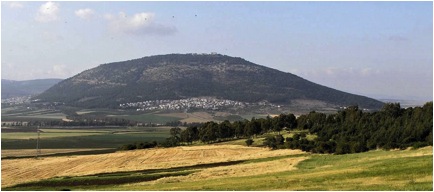
Mt. Tabor as seen from the Jezreel valley. This is the traditional site of Christ's transfiguration. (From Photo Guide 3, Accordance Bible Software)

When Peter, James and John went with Jesus up the hillside of Mount Tabor (the traditionally accepted place of Christ’s transfiguration), they had no idea what was awaiting them (Mark 9:1-8). It is likely they expected to hear another teaching from Jesus, or perhaps to have occasion to ask him questions regarding the messianic kingdom they were anticipating. Or maybe they had hoped to eavesdrop on his prayer time and gain insight into the mysterious communion between the Father and Son. But the biblical account reveals none of the above. Not, at least, in the way one would expect.

The title “transfiguration” can be a little misleading, because Jesus was not transfigured into something other than himself – more beautiful or spiritual. It was simply a fuller revelation, the unveiling of Christ’s already-present, divine nature. His deity merely was cloaked in human flesh (Phil 2:6, Col 1:19) and “hidden” to all but the spiritually perceptive eye. Yet here, Jesus would give these three disciples a visual message that would speak volumes into their hearts and minds for the rest of their earthly lives, a message meant for all of us. It would prove to be a sight that they desperately needed to behold. Future persecution and challenges to their calling otherwise might have overwhelmed their impressionable hearts and paralyzed their global mission (Matt 28:18-20). The steeling of their confidence in Christ’s person began with this experience and concluded with the post-resurrection appearance of Jesus. In time the disciples would need to fall back on the reality of Christ’s glory soon to be shared by them in the coming kingdom. Envisioning Christ in the glory of his coming indeed helps steady us in the hardest of times.

But what about Moses and Elijah? Why the appearance of these two with Jesus and why did the Lord want us to know about it? Often we Bible teachers like to point out that Moses represents the law and Elijah represents the prophets (although Isaiah might be more representative of the prophetic canon than Elijah), and how together they point to Jesus as the fulfillment of both collective writings. Jesus satisfied the demands of the law and he is the center subject of prophecy. No scholar is likely to debate this point, for Jesus himself declared that the law, the prophets and even the Psalms speak of him (Luke 24:44). In fact, Jesus is the Word incarnate, the embodiment of Scripture; its author and content, its source and its subject (John 1:14, 2 Peter 1:11).

The transfiguration alone would have been sufficient to reveal the power of God’s coming kingdom and the glory of the Messiah that we shall one day enjoy with him. But there appears to be one more element in this visual message whose color adds to the overall portrait of Christ. That the Messiah would be both man and God was in fact prophesied (Isa 7:14; Matt 1:23) but had nonetheless escaped the understanding of the most astute Rabbis of Christ’s day. Thus many of his statements were taken to be blasphemous (Matt 26:64-66; Mark 14:62-64; John 10:30-39) and punishable by death. I would submit that a significant part of the “transfiguration” message for us is found in the experiences of Moses and Elijah in the Old Testament (Exodus 19, 1 Kings 19). They both met with God, did so on a mountain, and while doing so received revelation from Him . Once again, here on a mountain Moses and Elijah (now also Peter, James and John) were meeting with God. They became the recipients of a most spectacular revelation, summarized and culminated in the very person and nature of Jesus – his deity and the Father’s audible affirmation of him as His beloved Son! Jesus is “Immanuel, God with us.”

One of These Little Ones…

“Children should be seen, not heard!” was the saying I remember hearing around my childhood house. Sadly, this is still the way children often are made to feel today. As though they were a disturbance, a nuisance, a distraction. Nothing to contribute to the world of adults. What they say is, well, terribly childish. And true enough, their hungry curiosity, bold sincerity and ceaseless energy try the patience of every cranky adult. Even the seasoned parent risks embarrassment with a child’s spontaneity. Our kids have said some things in public that made us wish we were just their babysitters.

But such are the God-given qualities that make children so very special. God has built in an inquisitiveness that keeps them asking, observing, and always wanting to learn more. They’re full of questions and anxious to share their discoveries. There are no pretenses with little ones. They can be abrupt but you’ll almost always know what they are thinking. And make no mistake about it, they have a capacity to grasp spiritual truths at a profound level. Kids are readily stirred towards genuine thanksgiving to God for the least suspected things in life. Like their pajamas, spill-proof cups and Transformer underwear. This is something to be desired and emulated in our stuffy adult lives. I don’t think I have ever thanked the Lord for my underwear! But what a blessing it is to be excited over the little things in life. Too often we take them for granted.

Not quite three weeks ago my four-year-old son drew a picture of three crosses, as one would imagine the scene at Calvary with Jesus in the middle. On his own initiative he drew it, then colored it and put his name on it. “This is for Jesus,” he said, handing it to me. “I am going to give it to Jesus in heaven. It’s a birthday present from me to him.”

That act of thoughtfulness and sincere love for Jesus brought a smile to my face and tears to my eyes. When was the last time I expressed such gratitude and care for my Savior, let alone prepared a gift for him? I believe Luka’s artwork rose to the heavens as a sweet smelling aroma to the Lord. His little heart birthed this simple worship, reminiscent of the spikenard poured over Jesus’ feet by Mary in spontaneous, thankful adoration (Jn 12:3).

“Can I go to heaven right now?” Luka went on to say. “I want to go to heaven without dying. Do we eat food in heaven? I want to fly around when I get there!” The thinking process of this almost-five-year-old is rather humbling when I consider how little thought we adults typically give to these subjects. I can’t recall the last time I heard any BIG people express such immediate and sincere desire to go to heaven and bring along a gift for Jesus. Isn’t it also revealing that children were the ones who spontaneously worshiped Jesus in the temple? And when the prim-and-proper religious leaders heard it they were indignant and told Jesus to make the children stop. Jesus then responded, …have you never read, ‘OUT OF THE MOUTH OF INFANTS AND NURSING BABIES YOU HAVE PREPARED PRAISE FOR YOURSELF’?” (Matt. 21:15-16)

No wonder the Lord sharply rebuked the disciples when they hindered the children from coming to him to ask for his blessing. He quickly told them that the kingdom of heaven belongs to such as these little ones (Matt. 19:13-14). Perhaps the disciples thought those children would be a nuisance to Jesus and “should be seen but not heard.” Maybe they felt those children were not important enough to merit the Master’s attention? Whatever the case, they couldn’t have been more misguided. Jesus set the record straight and gave a new example for all to follow. When asked who is the greatest in the kingdom of heaven, Jesus did the unthinkable for a 1st century Jew. He took a little child and put him in the midst of them as the object lesson for his answer. What Jesus said next was radical.

“Truly, I say to you, unless you turn and become like children, you will never enter the kingdom of heaven. Whoever humbles himself like this child is the greatest in the kingdom of heaven. Whoever receives one such child in my name receives me, but whoever causes one of these little ones who believe in me to sin, it would be better for him to have a great millstone fastened around his neck and to be drowned in the depth of the sea.” (Matt 18:1-6 ESV)

We shouldn’t forget that Children are demanding, selfish, impatient, moody, terribly persistent and downright sinful at times. But so are most adults, no? We’re all born as sinners and it’s in our nature. Nonetheless, Jesus selected children as the exemplary recipients of God’s kingdom. Clearly these words puzzled every listener then present. Two thousand years later they continue to challenge this 21st century father to  learn from his own curious and bubbly children!

Kids have a lot to offer our adult world, so be careful to not exclude them from yours. Jesus certainly didn’t. And the next time you are around a five-year-old, take note of his thought process, sensitivity, curiosity and above all, his inquisitive ability to receive the things of God with joyful certainty! You will likely come away with a good lesson to put into practice.

Every blessing,

Mark at uThinkology

A voice crying in the WordPress, or at least wanting to!

I felt I ought to let you know why there’s been such silence and what is coming down the pipe at uThinkology. As you can see, the waters have been a little still these last two weeks. I just really haven’t had the time to put together my thoughts. Well, that’s not entirely true. I have had the time, just not the right time. If you are someone who writes you will know exactly what I mean by that. There is a right and a wrong time to write. In the evenings after the children have been put to bed, I’m offered about one and a half hours, two max, before I follow in their wake. But during that time there isn’t much left of my brain to put words on paper, or on my laptop screen I should say. That is not the right time to write!

However, I am excited to say that I’ve got about a half dozen posts on the back burner covering a variety of subjects. I will be sure to put out at least one this week. If I make the coffee a little stronger, maybe I’ll even get two out there. Next up will be a post about Jesus and the children he encountered during his earthly ministry. Have you ever wondered why he pointed to them as the exemplars of his kingdom? I was so blessed by something my four-year-old son said to me the other day that it led to a lengthy look into the gospels, and then worked its way into a uThinkology draft.

Following that, we’ll return to the virtual pastor and the virtual church series to consider the effects our modern, technologically and market driven culture is having on the bride of Christ. I hope you’ll join the discussion when we get those up on uThinkology. What uThink on these subjects really does matter, and it will greatly affect your approach to church life.

Til then, every blessing!